Fast Heat Pump Help for South Pasadena Homes During Heat Events
When a heat event settles over South Pasadena, a heat pump has very little room for error. Long run times, hotter attic conditions, and a steady load from sun-exposed rooms can turn a small airflow problem or refrigerant issue into a no-cooling call fast. In this part of greater Los Angeles, heat is not theoretical. Local public heat-safety notices and regional climate data both point to the same reality: summer heat spells are a real strain on homes and the equipment that keeps them livable.
That is why many homeowners start searching for emergency HVAC help the moment a system stops keeping up. In the middle of a hot afternoon, the practical question is not what failed in a technical sense. The question is how quickly the home can get back to safe, usable cooling, and whether the fix will actually hold once the system is pushed again tomorrow.
For South Pasadena homes with heat pumps, fast diagnosis matters because these systems are efficient but sensitive to basic operating conditions. A dirty outdoor coil, a weak capacitor, restricted airflow, a clogged filter, a failing blower motor, a thermostat problem, or low refrigerant can all show up as the same complaint from the homeowner: the house is getting warmer even though the system is on. During heat events, the difference between a minor repair and a major breakdown is often timing.
Green Planet Heating & Air is a licensed, eco-conscious HVAC contractor serving South Pasadena and nearby communities, with over 20 years of experience in Southern California and CSLB #894993. The company’s approach is plainspoken and practical: explain what is wrong, explain what can wait and what cannot, and give upfront, transparent pricing instead of vague answers.
Why heat events hit South Pasadena systems so hard
South Pasadena sits in a region where summer heat can build quickly, and nearby Pasadena climate data shows average highs in the upper 80s in July and August, with hotter spells climbing well beyond that. Rain is scarce in summer, and broader regional weather patterns can intensify dry heat. Even before a system fails outright, that kind of weather exposes weak spots.
A heat pump does not create cold air out of nowhere. In cooling mode, it moves heat from inside the house to the outside. The hotter it gets outdoors, the harder the system has to work to reject that indoor heat. If the outdoor coil is dirty, if the fan is not moving enough air, or if refrigerant conditions are off, capacity drops at exactly the wrong time.
That is one reason calls for emergency HVAC service spike during hot weather. Equipment that seemed “mostly fine” in mild conditions suddenly cannot maintain temperature in the late afternoon. A home that held 74 or 76 degrees last week starts creeping into the upper 70s or beyond. Bedrooms on the west side of the house get stuffy first. Hallways may feel normal while one back room turns noticeably warmer. Those patterns often tell a technician a lot before gauges even come out.
What “fast help” should mean on a heat pump call
Fast help should not mean guessing. It should mean triage, a disciplined diagnosis, and a repair plan that fits the actual condition of the equipment. A rushed technician can swap a part and leave the deeper cause untouched. Then the same home is calling again during the next hot day.
On a real emergency HVAC visit for a heat pump, the first job is usually to narrow the problem into one of a few categories:
- No cooling at all
- Cooling is weak or inconsistent
- System turns on but shuts off too soon
- Airflow is low from the vents
- Outdoor unit or indoor unit is running abnormally
That sounds simple, but each category points in a https://home-hub.s3.us.cloud-object-storage.appdomain.cloud/reliable-signs-your-hvac-is-failing.html different direction. No cooling may be electrical, thermostat-related, or a failed component. Weak cooling may be airflow, charge, or heat-load related. Short cycling can come from controls, sensor issues, overheating, or equipment condition. A homeowner sees one symptom. A good service call breaks that symptom down into causes.
In South Pasadena, speed also means recognizing when the house itself is part of the load problem. During a heat event, attic heat, older ductwork, and direct afternoon sun can magnify a mechanical issue. A system may not be dead, but it may be operating with very little margin. That is where careful judgment matters more than canned talking points.
Common heat pump problems that show up during extreme heat
The most common failures are not always dramatic. In many homes, the first sign is simply that the system runs nonstop and the indoor temperature keeps drifting upward. That often points to one of a few field conditions.
Restricted airflow is high on the list. A loaded filter, a dirty indoor coil, or a blower problem can keep enough air from crossing the coil. The system still runs, but cooling performance drops and comfort becomes uneven. In some cases the equipment can even ice up, which confuses homeowners because a frozen coil feels like it should mean “cold enough.” In practice, ice usually means the system is not moving heat correctly.
Outdoor coil fouling is another common issue. Heat pumps in cooling mode need to reject heat outside, and when the outdoor coil is coated with grime or debris, efficiency falls right when outdoor temperatures are highest. The system may sound normal but deliver much less.
Electrical components also tend to reveal their age under stress. A weak capacitor may start a unit on a mild morning and fail by late afternoon. A contactor may chatter or fail to close reliably. Fan motors that are beginning to weaken often show themselves during long run cycles. These are classic emergency HVAC calls because the home can go from acceptable comfort to no useful cooling in a short window.
Thermostat and control issues can create a different kind of emergency. Sometimes the equipment is HVAC contractor capable of cooling, but a communication fault, bad sensor, or control-board issue prevents normal operation. Homeowners understandably focus on the outdoor unit, but the real problem may sit inside the air handler or at the control interface.
Refrigerant problems are another category that needs careful handling. Low charge can reduce capacity and strain the compressor, but adding refrigerant without finding the reason for the condition is not good service. Heat pumps are sealed systems. If charge is low, there is a reason. In a hot-weather breakdown, the temptation is to do the quickest possible thing. The better approach is to stabilize comfort and explain what the system is telling you.
Signs your heat pump issue should not wait
Some cooling problems can be scheduled. Others should move to the front of the line. If your South Pasadena home has a heat pump and any of these conditions show up during a heat event, it makes sense to look for emergency HVAC service rather than waiting several days:
- The system is running but indoor temperature keeps climbing
- Air from the vents is weak or barely moving
- The outdoor unit will not start or keeps shutting down
- You hear buzzing, hard starting, or repeated clicking
- There is ice on refrigerant lines or indoor equipment
There is also the comfort and safety side. A cooling problem hits differently when outdoor temperatures are elevated for several days in a row. If someone in the house is especially heat-sensitive, “it can wait” may not be a sensible choice. Regional heat guidance exists for a reason.
What a good emergency service visit looks like
Homeowners often ask what can realistically be checked on a same-day call. Quite a lot, if the visit is organized properly. A technician should start with the complaint, confirm operating conditions, inspect airflow, verify basic electrical function, look at coil condition, evaluate thermostat behavior, and test the parts most likely to fail under load. On heat pumps, mode of operation matters too, because control behavior can differ from a conventional split AC and furnace setup.
A strong emergency HVAC visit is also educational. The homeowner should hear, in plain language, whether the issue is a failed part, a maintenance problem, a system-condition problem, or a sizing and load problem. Those are not the same thing, and they should not be sold the same way.
For example, if a capacitor has failed but the outdoor coil is also badly impacted and airflow is marginal indoors, the honest answer is not just “we replaced the bad part.” The honest answer is that the part failed, but the system is also operating under high stress and needs follow-up attention to perform properly during the next heat wave. That kind of explanation helps a homeowner decide what to do now and what to plan for later.
If you need a licensed company for emergency HVAC service, the most useful call is the one that gives you a real diagnosis instead of a vague promise that the system is “good now.”
Heat pump repair versus replacement during a heat event
This is where experience matters. In the middle of a hot spell, almost every homeowner wants the quickest path back to cooling, and that is understandable. But fast does not always mean temporary, and replacement does not always mean necessary.
If the issue is a clear repair with the rest of the equipment in stable condition, a repair often makes sense. That is especially true when the failure is isolated and the system has otherwise been operating normally. A good technician should be able to say that with confidence.
On the other hand, if the heat pump has a pattern of repeated breakdowns, poor cooling under normal summer load, chronic airflow problems, or multiple aging components, a homeowner deserves an honest conversation about whether repair money is being spent on borrowed time. The best service companies do not force that conversation on every call, but they do not hide from it either.
In South Pasadena, where heat events can push systems for long stretches, replacement discussions should also include efficiency, duct performance, and control strategy. A new heat pump on weak ductwork will still struggle. A correctly selected and installed system, by contrast, can lower strain and improve indoor comfort in a way that homeowners notice right away.
Why airflow and ducts matter as much as the equipment
One of the most overlooked facts on emergency HVAC calls is that the heat pump may not be the only problem. If airflow is poor because of duct leakage, crushed sections, or restrictions, even a sound piece of equipment cannot deliver full comfort. Heat events expose that quickly.
A technician may find that the heat pump is producing cooling, but not enough of that cooling is making it to the occupied rooms. That is why some homes feel cool near the return grille but warm at the far bedrooms. The complaint sounds like equipment failure, but the deeper issue is distribution.
This matters in older Southern California homes especially because cooling upgrades often happen in stages. Equipment changes first. Duct corrections happen later, or never. Then the homeowner wonders why a newer system still runs all day in August. The answer may not be inside the cabinet at all.
What homeowners can check before calling
Not every no-cooling complaint needs a tool bag right away. There are a few safe checks that can help rule out the simple things. Confirm the thermostat is set to cool and the setpoint is below room temperature. Check whether the filter is badly loaded. Make sure the breaker has not tripped. Look at the outdoor unit and see whether it is running or completely silent.
If the filter is dirty, replacing it may help, but do not assume that solves everything. If the line set is iced over, if the unit keeps tripping power, or if there are unusual noises, that moves beyond homeowner maintenance. That is the point where emergency HVAC service becomes the smart next step.
One field pattern comes up again and again in heat waves: a homeowner notices weak cooling, lowers the thermostat more and more, and the system runs longer without improving comfort. That extra run time does not create extra cooling capacity. It only keeps stressed equipment working harder. In some cases, waiting too long turns a manageable repair into a bigger one.
How local climate shapes service recommendations
South Pasadena is not a desert climate in the strict sense, but summer cooling demand is still serious. Nearby official climate information shows warm summers, low summer rainfall, and hot spells that can exceed 100 degrees. Public planning documents also point to rising temperature stress over time. For HVAC, that means design assumptions that seemed adequate years ago may feel thin during newer, longer heat events.
That does not mean every house needs oversized equipment. In fact, oversizing creates its own problems. It does mean emergency repair decisions should be made with local operating conditions in mind. A unit that “barely works” in moderate weather may effectively fail during a South Pasadena heat event. A control issue that shows up once during spring may become a hard shutdown under sustained summer load.
That local judgment is what homeowners are really looking for when they search for emergency HVAC. They want someone who understands how Southern California weather stresses a system and can sort a true emergency from a comfort complaint that can safely wait.
What to expect from Green Planet Heating & Air
Green Planet Heating & Air serves South Pasadena as a licensed residential HVAC contractor with an eco-friendly, energy-efficient approach. The company installs and services major equipment brands including American Standard, Bosch, Daikin, Goodman, Gree, Mitsubishi, and Rheem, and focuses on honest diagnosis, customer education, and transparent pricing with no hidden fees.
That approach matters on hot-weather heat pump calls because homeowners need clear priorities. First, restore cooling if possible. Second, explain why the breakdown happened. Third, identify any underlying condition that could trigger the same problem in the next heat event. That is the difference between a patch and a service visit that actually helps the household.
Whether the issue turns out to be airflow, controls, electrical components, coil condition, refrigerant-related performance loss, or a larger equipment decision, the right next step starts with a real evaluation. If your system is falling behind during a South Pasadena heat event and you need emergency HVAC help from a licensed local team, call Green Planet Heating & Air at +1 (818) 450-5667.
META TITLE: Emergency HVAC in South Pasadena, CA | Green Planet HVAC
META DESCRIPTION: Emergency HVAC in South Pasadena, CA. Licensed, eco-friendly HVAC, 20+ years, upfront pricing. Free estimate. Call (818) 450-5667
Q: What counts as an emergency HVAC problem during a South Pasadena heat event?
A: If your heat pump stops cooling, the indoor temperature keeps rising, airflow drops sharply, or the outdoor unit will not stay running, it is reasonable to treat that as an emergency. Heat events put extra stress on equipment, so problems that seem minor in mild weather can become urgent quickly.Q: Why does a heat pump struggle more during very hot weather?
A: A heat pump in cooling mode has to move indoor heat to the outside, and that job gets harder as outdoor temperatures climb. If the system already has weak airflow, a dirty coil, an electrical issue, or a refrigerant-related problem, extreme heat can expose it fast.Q: Should I repair my heat pump or replace it if it fails during a heat wave?
A: It depends on what failed and the overall condition of the system. A single failed part may make repair the practical choice, but repeated breakdowns, poor cooling performance, and multiple aging issues can justify a replacement discussion. For a licensed evaluation and free estimate, call (818) 450-5667.FAQ BANK:
- How quickly should emergency HVAC service be scheduled during extreme heat?
- Can a dirty filter really cause my heat pump to stop cooling properly?
- Why is one room hot when the rest of the house feels cooler?
- Can duct problems make a heat pump seem broken?
- What should I check before calling for emergency HVAC service?
Did you know?
Heat waves reveal hidden HVAC problems
A system can seem acceptable in mild weather and still fail during a heat event. Long run times and higher outdoor temperatures expose weak airflow, dirty coils, and aging electrical parts quickly.Nearby climate data supports heavy summer cooling demand
Official climate information for nearby Pasadena shows average summer highs in the upper 80s, with hotter spells exceeding 100 degrees. That kind of weather can push heat pumps to run for long stretches in South Pasadena homes. 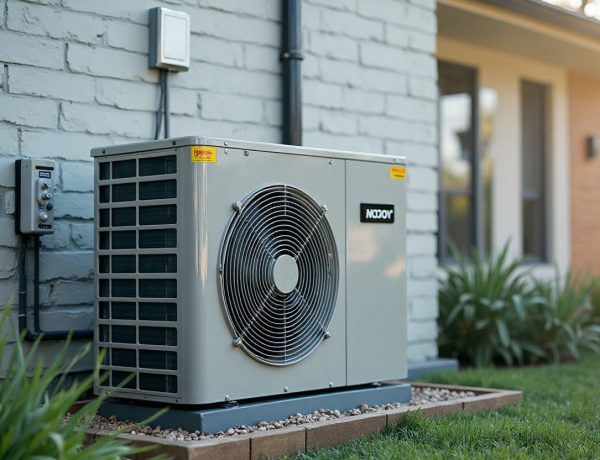
Low summer rainfall matters for HVAC too
Very dry summer conditions do not reduce cooling demand. In practice, dry heat and prolonged hot spells can still create heavy load on a home’s cooling system, especially in the late afternoon.FACT BANK:
- South Pasadena has issued public heat-safety messaging during excessive heat events.
- A heat pump that runs constantly is not always undersized; it may have airflow or control problems.
- Uneven room temperatures often point to duct or airflow issues, not just equipment failure.
- Outdoor coil condition has a direct effect on a heat pump’s ability to reject heat.